Wednesday, April 4, 2012

Cuzco to Aguas Calientes Part II - The rest of the photos


Salt pool terraces


Ancient Inca crop laboratory,  or alien landing site.


It's difficult to tell from this image,  but these are a series of steps leading in and out of the rings.  The Incas simply built steps into the walls by placing larger rocks that extended out from the side of the walls.  These rocks had generally flat surfaces on the top,  and when placed together in this way,  served as a sort of dangerous stairwell.  My guide hopped up and down these without thinking about it.  I took my time and moved a little more slowly than he did.


Monday, April 2, 2012

Cuzco to Aguas Calientes

"Adventure is what happens when something doesn't go according to plan."  is what I wrote near the beginning of this blog.  Today was an adventure,  and as it turns out,  a very good one.  I was supposed to have been picked up at my hostel this morning at 10am,  brought to the bus station,  caught a bus to Ollantaytambo,  where I'd pick up a 12:35pm train to Aguas Calientes.  It was supposed to be a nice light travel day,  I would be just hanging out in Aguas Calientes for the rest of the day,  getting settled,  and preparing for the trek to Machu Picchu in the early morning.

That didn't happen.

I was picked up from my hostel at more or less the right time, but then my driver informed me that because I had visited the travel agency too late the night before that there were no spaces available on the 12:35pm train.  He suggested that he bring me to the bus station anyway,  and that I would spend most of the day walking around Ollantaytambo.  This did not sound appealing to me at all,  especially with a large backpack in tow.  I asked him what my other options,  and this led to a discussion where eventually we agreed that he would take me on a day tour of several Inca sites between Cuzco and Ollantaytambo.  In particular,  there were two things I had very much wanted to see,  but had written them off as not having enough time.  Today I got to see both of those,  and that made me very happy.  The first was a salt mine.   You'd think I'd had my fill of salt after the Bolivian Salt Flats, but no,  I felt the need to see more salt.

This salt is mined in a very different way than the salt flats.  In this case,  there is a natural spring which comes out of the side of a mountain.  Even before the Incas showed up,  the local population had figured out that this spring was extremely salty, and that they could build terraces in the side of that mountain,  and divert the water slowly into these shallow pools.  The water fills the pools,  then is diverted the next set of pools,  and over time each of the 3000 or more pools fills.  These are then left to evaporate,  leaving several hundred kilos of salt in each of them.  The salt on the top is white,  it is high grade salt,  fit for human consumption.  The lower levels of yellow and brown salt are used for various other things,  including fattening up cattle.  Most of the salt harvested from these ponds is exported to Europe and Japan.   I found the mechanism of this all to be pretty fascinating,  but even more so,  the complex abstract patterns these pools created are very exciting for me as a photographer.

The second area was where the Incas had built a series of concentric circles,  ever lower,  nestled in large hills.  The American archeologist who discovered the site in the early 1920s found that each level had different types of crops that had been planted there.  This eventually led the scientific community to believe that this was an experimental area for the Incas,  indeed,  there is a significant temperature differential as you climb from the top down to the bottom.  The Incas did not have a written language,  and the Spaniards destroyed much of the Inca culture in the 1500's,  so little is known for certain about any of the Inca ruins.  It is believed however that his location served as a laboratory where they could test which plants grew well at which temperatures and which altitudes.  Given the evidence of Inca knowledge of Astronomy,  it would not be too far of a stretch to imagine them conducting these kinds of experiments on their crops.

During the entire day,  my guide was extremely knowledgeable and informative.  He recently graduated with a degree in tourism,  which requires this in depth knowledge,  and passing a test which involves pretending that his professors are tourists,  taking them to different places,  and answering random questions from them.  He was very proud to show me his recently acquired government issued tour guide card. 

At the end of the day he brought me to Ollantaytambo,  where I caught the 7pm train to Aguas Calientes,  where I am now typing this blog entry.  Once I reach the city,  I expect to be picked up by my hostel there,  and catch a short night's sleep before getting up early to get to Machu Picchu before the crowds roll in at 10am.

Update:  Made it to the hostel.  Waiting to meet my guide and then get to sleep as quickly as I can.  4:30am will come very early tomorrow morning.


Ok.  The internet here is not being cooperative.  I'll upload the rest of today's images tomorrow hopefully.

Sunday, April 1, 2012

Puno to Cuzco, Peru

Today was another travel day, and I'm beginning to realize the wisdom of my approach earlier in the trip of spacing out travel days with days I can just relax and hang out in a new location.  9 hours on a bus today was not the most pleasant thing I've ever done,  however,  I had chosen to take the "tourist" bus from Puno to Cuzco,  which involved stopping at a number of places and learning a bit about the history of the Cuzco valley. 

Because it is a week before Easter,  churches here are celebrating the triumphant entry of Jesus into Jerusalem.  We came across one of these churches today,  and people in Peru are not unhappy with getting their photos taken,  unlike the Bolivians I encountered.  I of course asked first before shooting any of these,  I always try to be respectful when photographing people.

As we crossed over the highest point in the valley we were traveling through (about 4500m),  we stopped at an Andean market.  Once we moved beyond this,  the vegetation began to change dramatically.  We entered a much wetter part of the valley,  and trees began to appear, along with some threatening grey clouds.  By the time we arrived in Cuzco,  there had definitely been some rain,  and it has been raining off and on since then as well.  I'm hoping my trip to Machu Picchu in the next few days has good weather, but if it doesn't,  I'll make do with what I have.

In the interest of trying new foods,  I ate llama for lunch today.  Delicious!  Much better than the Guinea Pig from yesterday. 

After getting into Cuzco and getting successfully checked in to my hostel,  I went to a travel agency that was recommended to me by the British couple I met in Puno,  and got my travel plans for the next few days.  Tomorrow night I'll be in Aguas Calientes,  getting up early in the morning to see Machu Picchu,  and returning to Cuzco tomorrow night.  The time that I fly back to Seattle is drawing ever nearer.

One last thing.  My room is at the very top of a narrow spiral staircase.  I hope I don't have to go to the bathroom in the middle of the night.  Navigating my way down those stairs in flipflops seems like it would be a major disaster.


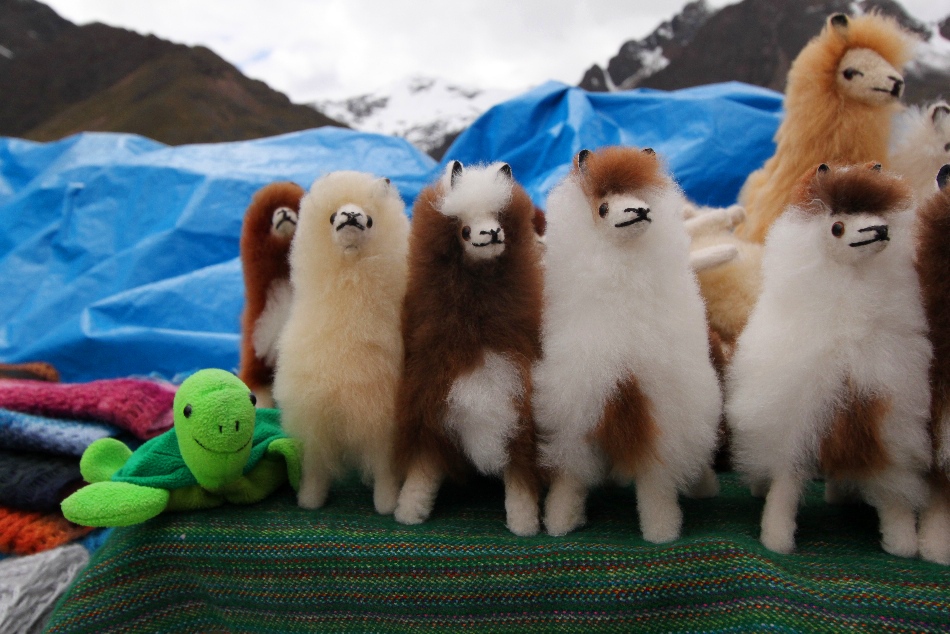
Jacques making new llama and alpaca friends.


Floating Island Pics

ok,  lets see if this works.  Hey,  it did.  Awesome.  Apparently I have a pretty high speed internet connection here in Cuzco.


Traveling out to the floating islands


First sight of an actual island that is actually floating.


The daily life of the residents of these islands was acted out for us with tiny props.  In the background,  the actual life of of the daily residents,  which has far more to do with selling stuff to tourists than anything else,  from what I could tell.


Departing the island we were treated to several songs in Spanish,  and "My Bonnie Lies Over the Ocean" in English.


Saturday, March 31, 2012

Floating Islands, and Computer Trouble

Hi all,

  Today was a travel day, and I spent a good portion of it being somewhat uncomfortable on a bus.  I went from Copacabana,  Bolivia,  to Puna,  Peru.  Much of the trip was fine,  the border crossing was fairly easy,  even if our bus driver did lie to us about where we could and could not exchange money.  (I have no doubt he was getting kickbacks from the single exchange place we were all funneled to).  In Puna I signed up for a tour of the floating islands,  but by that time was cranky from not having had enough food.  I found myself pretty angry that while on the tour one of the guides tried to hit us all up for an additional 10 Peruvian Soles,  having already paid 20 Soles to go on the trip,  and refused to pay.  The rest of the trip was a tiny bit about education about the islands (conducted almost entirely in Spanish),  and a lot of opportunities for us to buy handmade crafts and food while there at inflated prices.  Cranky.

  I made it to my hostel ok,  and booked a bus for tomorrow to Cuzco,  which will be an even longer trip,  and I have to get up at 5:30am to meet my driver at 6:30am.  Not looking forward to that either.

  The highlight of my day was having dinner with a great couple from England.  We went to a restaurant that they'd been meaning to go to for a while in order to eat the Guinea Pig dish.  He ordered it,  it was heavily cooked in garlic,  and quite stringy,  but I tried some,  and it was not too bad to eat. 

  Ok.  Last thing,  I am having a lot of problems with my computer,  the hard drive seems to be slowly failing,  probably due to the altitude.  I don't think I'll be able to post any more photos for the rest of the trip,  but will do my best to add them in as separate blog posts later once I'm back in Seattle,  sometime after Apr 7.  Blog posts themselves will probably be a bit sparse until then as well. 

  Until next time!

Friday, March 30, 2012

Exploration in Copacabana, Bolivia

Today was a short travel day from La Paz to Copacabana,  both of which are in Bolivia.  Apparently this copacabana is the original one,  the beach in Rio de Janiero was named later. 

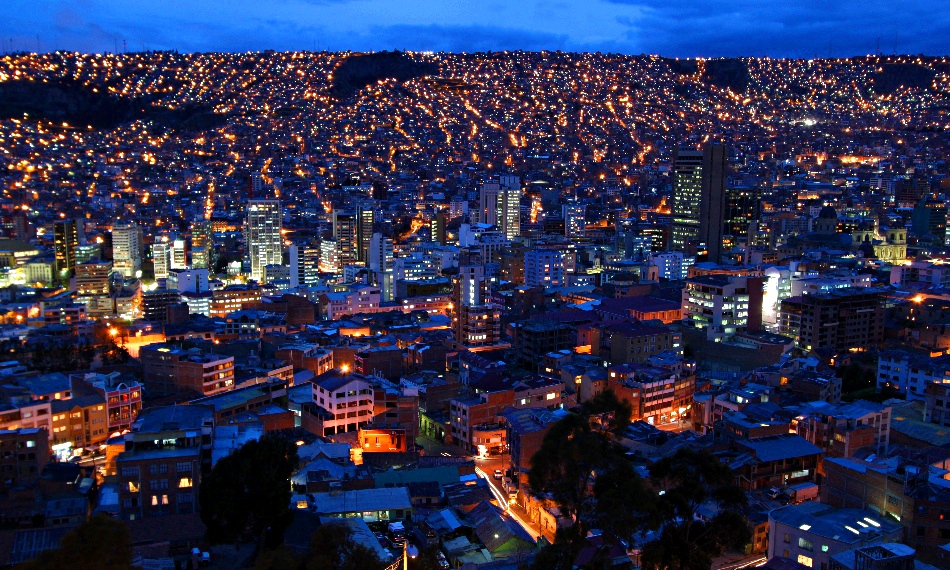
Today was one of those days that starts out chaotic and uncertain,  and then gets better.  I left La Paz,  which I continue to struggle to describe.  I've said that it's a jumble of colors and shapes,  and I've also said that the city borders on being slightly insane.  I'm not sure either of these really describes the city though.  Perhaps the best way to think of it is the feeling that you have when you have a fever,  and your perceptions of the world are slightly crazed,  overheated,  and too full of color and sharp points of light.  La Paz does make sense in its own way,  but being there is kind of like pressing on the sides of you eyeballs until you start to see oddly hallucinogenic shapes swimming through your field of vision. 

In leaving La Paz,  I was planning on listening to some nice soothing music,  but when I hit play on my iPod,  it was in the middle of an equally chaotic piece of electronic music.  It fit the mood perfectly,  and provided a perfect soundtrack to the ongoing chaos that I was seeing as we were moving up and out of the valley that the city sits in.  This path is a lengthy circular path,  given that the valley walls are too steep to drive straight up,  so you get plenty of opportunity to see your surroundings as you slowly ascend out.

Beyond La Paz proper I traveled through a great deal of sprawling neighborhoods.  The further from the city center you got,  the poorer these neighborhoods became,  and it was somewhat heartwrenching to see miles and miles of poverty.  More so than any other place I've traveled so far.

Eventually though we got out into the countryside,  then had scenes of traditionally dressed Bolivian women,  with their high bowler hats,  pleated skirts,  and colorful bags slung behind their back,  herding groups of sheep and cows.  It wasn't much longer when we reached Lake Titicaca,  and then I was in for a treat.  Part of our route took us on a ferry.  In order to cross this narrow part of the lake,  we all disembarked from the bus and took small passenger boats.  Meanwhile the bus was loaded onto a pretty rickety looking barge.  We more or less all beat the bus across the lake,  which meant we could stand around and watch the barge come in at a slow speed,  all the while hoping the silly thing wouldn't tip and dump its contents (including all of our backpacks) into the cold waters of the lake.  Fortunately we all made it safely, and so did the bus,  so soon we were on our way.  All of this gave me enough time to try my first bites of trucha,  or lake trout.  I typically don't write about the food I eat because it's difficult to describe,  and poorly described food experiences are pretty boring reading.  This fish though,  was amazing.  And I just had to giggle a litte bit in glee as I was standing on the shores of one of the largest, highest lake in the world,  eating freshly caught trout,  and watching my big tour bus slowly make its way towards us all.  It was a fantastic experience.

Soon after this we arrived in Copacabana,  a small town near the Peruvian border on the lake.  I spent the day exploring,  which mostly meant looking through Bolivian handicraft shops,  and eating at a lakeside restaurant while lounging in a beach chair.  I am at about 3800 meters of elevation,  which today meant that I was a little chilly,  but getting sunburnt at the same time.  Again.  :)

In the evening I hiked up to the top of a tall hill and managed to capture some of my favorite evening photography so far this trip.  The sunset was amazing for a very brief few minutes,  and the blue sky mixed with the yellow of the streetlights after the sun set makes me very happy.

After very slowly making my way down the cobblestone path (I had remembered to bring a flashlight),  I ate dinner at a tiny little street food vendor,  serving up more of that wonderful trout.  The street was full of people,  there was a guy carrying giant sides of raw beef past the whole time (just,  you know,  slung over his shoulder),  and small pickup trucks were backing up slowly down the street a foot from where I was sitting.  The tiny bench I shared with two Bolivians.  When I had finished my meal one of them spoke to me,  and I apologized that I spoke little Spanish.  At this point the food vendor leaned over towards me and spoke to me.  Everyone else chuckled,  and it took me a minute to realize he had spoken to me in a native language that was not Spanish.  I said,  "uh...,.that's not Spanish."  and they all chuckled some more.  I thought this was pretty entertaining,  and at any rate,  I was still enjoying the trout too much to do anything other than smile and enjoy whatever subtle joke they were having at my expense.  :)  It was a pretty great night that I finished up with by trying some more street food,  in this case some kind of hot drink made from Quinoa and water,  with a nice lemon flavor.  Yummy!

Okay then!  Photos galore!


Thursday, March 29, 2012

La Paz Exploration

Today was a long day of exploration,  which is what it should be.  I am feeling better, but it's too late to write full stories about the day.  Here instead are a few anecdotes:

- I ate lunch in a restaurant that had a version of "The Scream"  but with Homer Simpson instead.
- Lots of protests in this city,  several today,  several yesterday.  They have fireworks that sound like gunfire,  but it's not gunfire,  or so I was told.
- Crossing the street in La Paz is far,  far more dangerous than it ever was in Brazil.  Sometimes just walking down the sidewalk is dangerous,  as they are frequently not wide enough for one person,  and when two people meet,  someone has to step into the street.  At one point today I was approaching a corner and a minivan came around from the other side and nearly drove up on the sidewalk,  which was only a foot and a half wide at that point.  It is not at all unusual that I could easily reach out and touch passing vehicles.  Another time today I made it half way across a street,  then was trapped for several minutes with traffic zooming past in opposite directions in front of me and behind me.  Unnerving. 

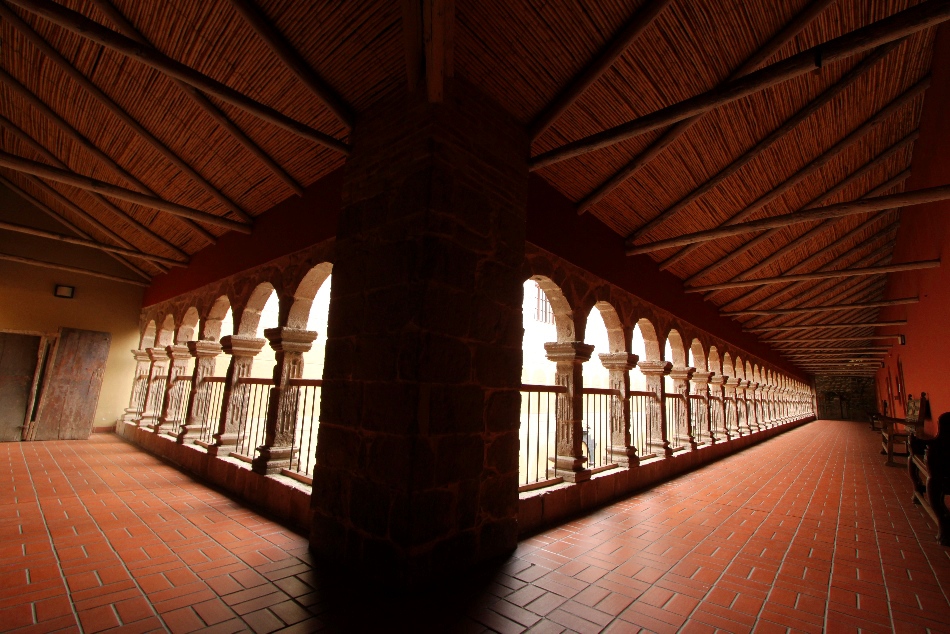
Ok.  My favorite photos of La Paz from today,  with a section in the middle from the museum of the Iglesia de San Francicso.